

Dead Animal in Your Yard or Attic? You Don't Have to Deal With It Yourself.
Private-property removal · Phone quote before any visit · Independent operators routed by your address.
Dead animal removal in Michigan, with calls routed by ZIP where an operator covers the address. Independent operators handle the carcass, the smell, and the cleanup. Price quoted on the call.
Who picks up dead animals in Michigan?
Michigan Dead Animal Removal connects Michigan homeowners with independent wildlife operators for dead animal pickup. Public right-of-way carcasses (city streets) are handled by city public works; state routes by Michigan DOT. Private property — your yard, attic, walls, crawlspace — is the homeowner's responsibility. Pickup in Grand Rapids, Lansing, Flint, Ann Arbor, and Kalamazoo, where an operator covers the address. The operator quotes on the call from the animal's size, where it is and the access. Call (616) 612-2122.
What a Michigan Dead Animal Call Actually Looks Like
Recovery gear, PPE, sealed transport containers and odor treatment — the equipment an operator brings to a Michigan carcass recovery.
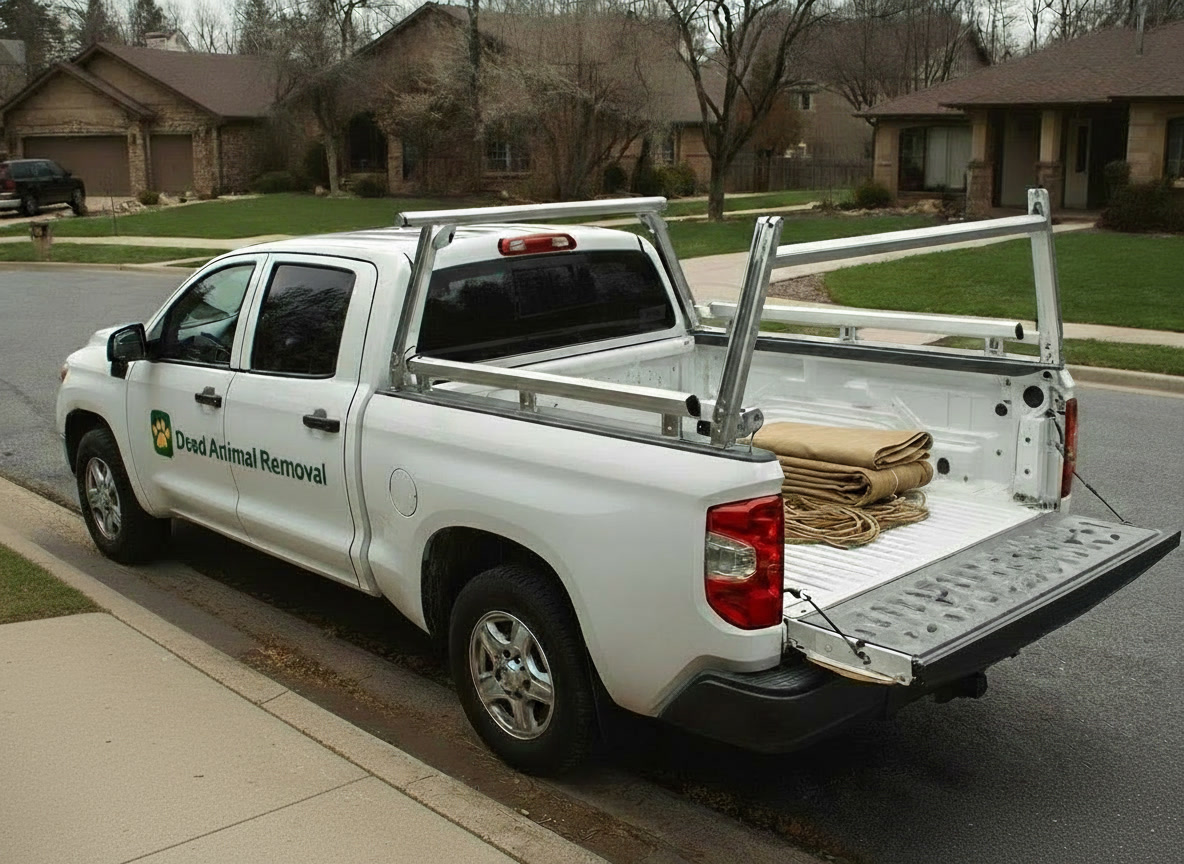
Recovery truck & equipment 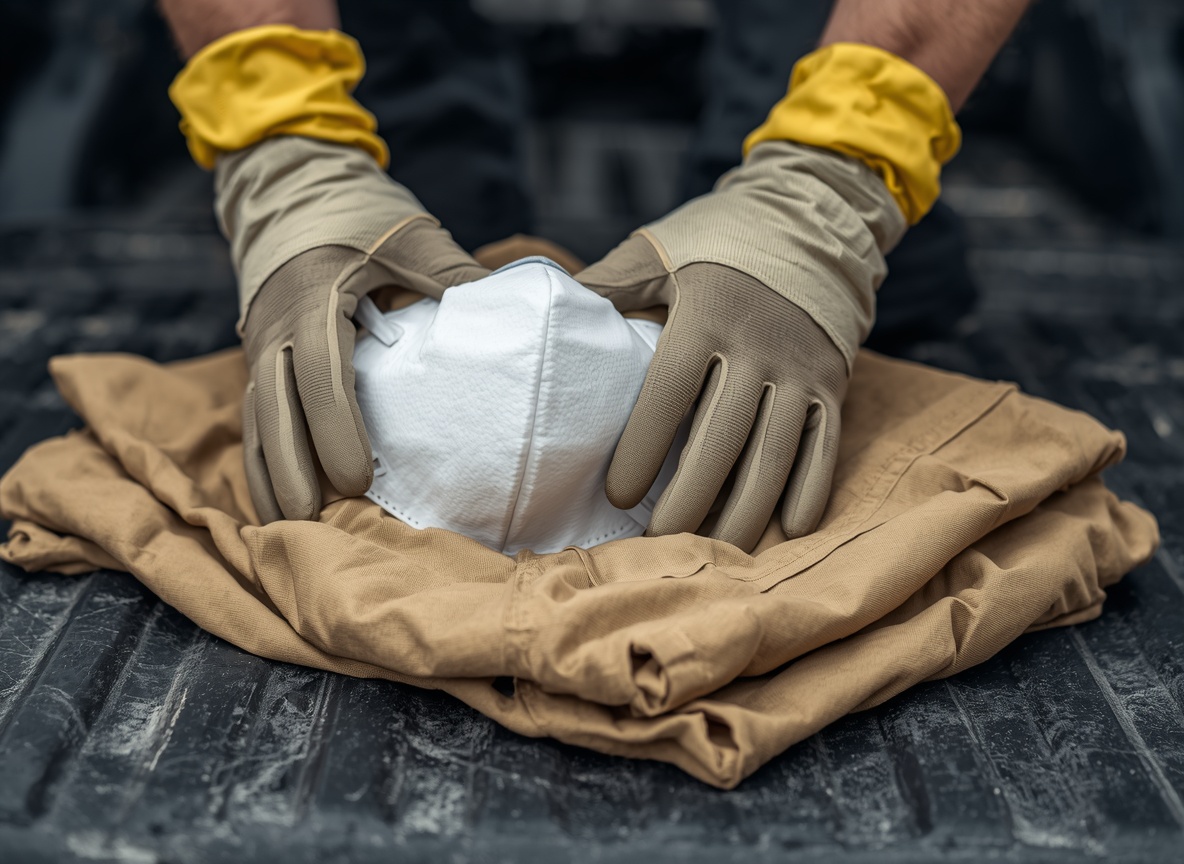
PPE & rabies-vector handling 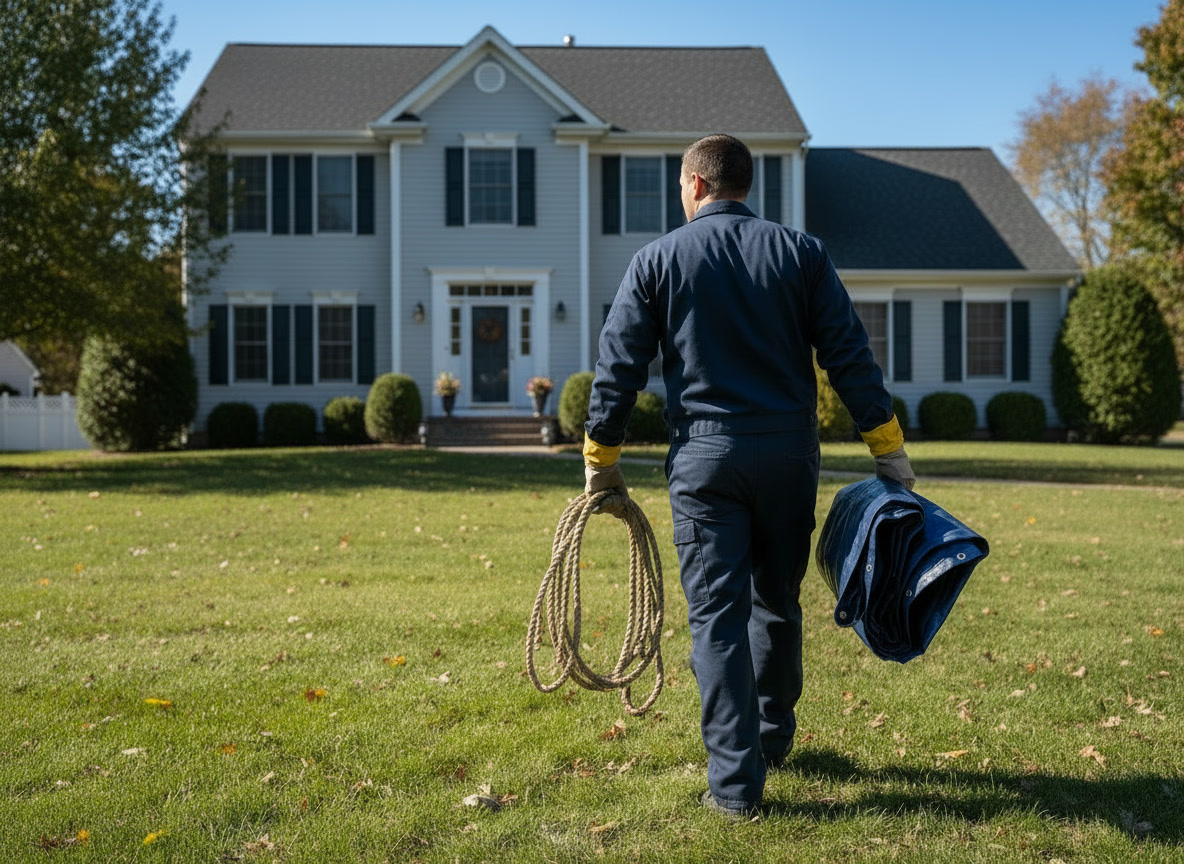
Arrival on site 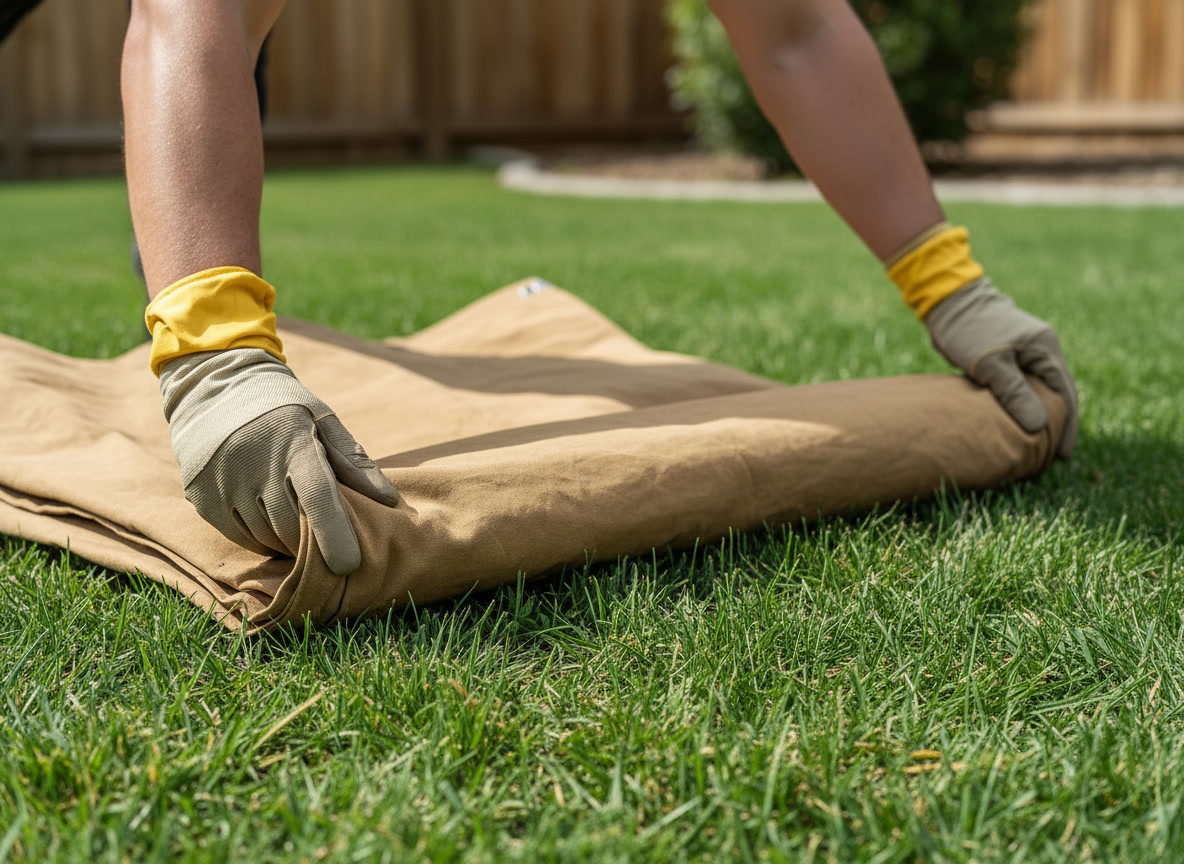
Yard recovery setup 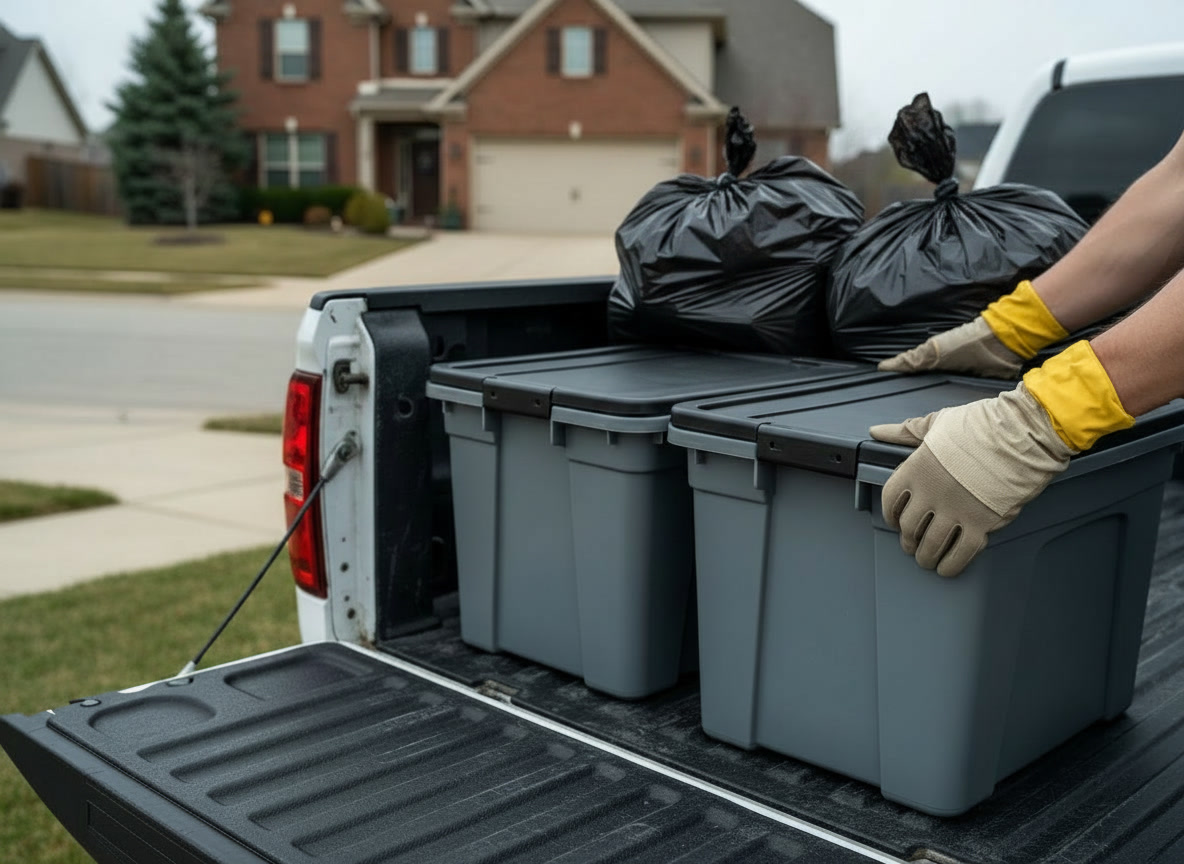
Sealed transport containers 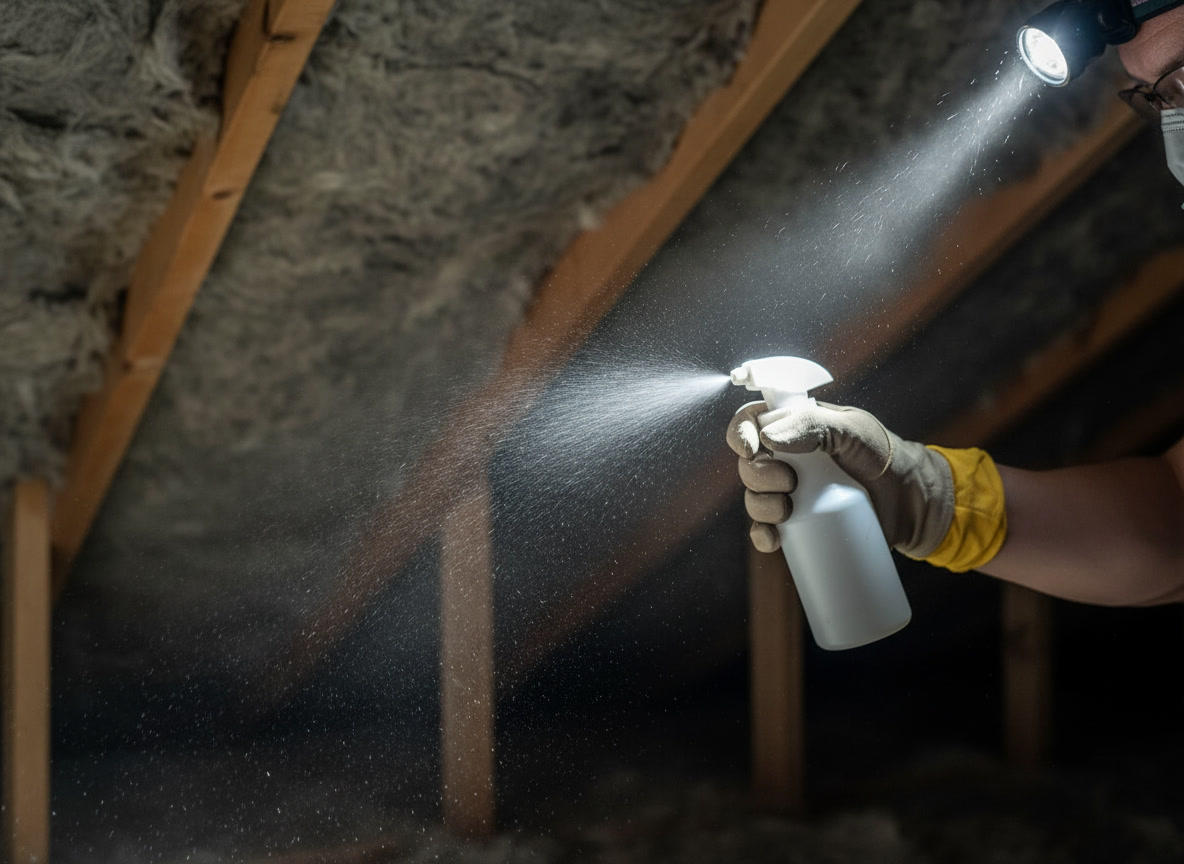
Odor-neutralization treatment
Images marked Illustrative are stock or AI-generated photographs used to show equipment and conditions typical of this work. They are not photographs of jobs performed by Michigan Dead Animal Removal or its partner operators.
How Much Does Dead Animal Removal Cost in Michigan in 2026?
What a removal costs in Michigan is set on the call, once the operator knows the animal's size, where it is, how easy it is to reach, and what disposal it needs. No per-hour billing.
| Situation | Where | What sets the price |
|---|---|---|
| Small animal outdoors | Yard, driveway, under a deck, road frontage | Size, access, disposal route |
| Small animal indoors | Attic, soffit, chimney, an accessible void | Confined-space access, sanitising, entry-point check |
| Crawl space or under a structure | Crawl space, under a porch or shed | Access, sanitising, disposal |
| Dead deer | Yard, driveway, road frontage, wooded lot | Weight, vehicle access, terrain, disposal |
| Odour with no visible source | Attic, crawl space, chimney | Locating the source; sealed finished walls are not opened |
- Quoted on the call
- No per-hour billing
- Before anyone drives out
- Independent local operators
What Happens When You Call Michigan Dead Animal Removal?
Ten steps from phone quote to invoice.
- Phone quote. Call (616) 612-2122. We capture location, species, where the carcass is, and accessibility. The operator quotes from those details.
- Dispatch. Your details go to the operator where one covers your address.
- On-site arrival. The operator arrives with appropriate PPE, recovery equipment (winch + tarp for deer, ladder for roof/attic, sealed-bag bins for transport), and MDARD-compliant disposal containers.
- Carcass recovery. Recovery with PPE. Rabies-vector species (raccoon, skunk, bat, fox) handled per MDHHS protocols (MDHHS rabies-vector guidance).
- Odor + sanitize (indoor calls). Enzymatic odor neutralization at the recovery site. Skunk recoveries typically include musk neutralization. Squirrel/raccoon attic recoveries include urine + grease trail treatment to prevent new wildlife following the scent.
- Entry-point assessment (indoor calls). If the animal got in, others can too. Operator flags the access point and provides a referral for permanent exclusion if you want it sealed.
- Disposal. Carcass disposed per MDARD solid-waste rules and county solid-waste district guidance. Rabies-vector species require additional handling — operator handles it. The operator removes the carcass rather than leaving it on-site.
- Site cleanup. Walk-through to confirm no residual fluids, fur, or scent that would draw secondary scavengers (coyote, vulture, neighbor pets).
- Invoice on completion. The operator quotes before the visit and invoices you directly. No per-hour billing.
- Follow-up referral (if needed). For ongoing wildlife activity (active attic, exclusion, live trapping): referral to a full-service wildlife operator. The dead-animal call is one-time; an active entry point is a separate engagement.
Michigan's Six Most-Called Species
Each species page covers where that animal is usually found on a Michigan property, what reaching it involves, and rabies-vector handling where it applies. Which species the operator covering your address takes is confirmed on the call.
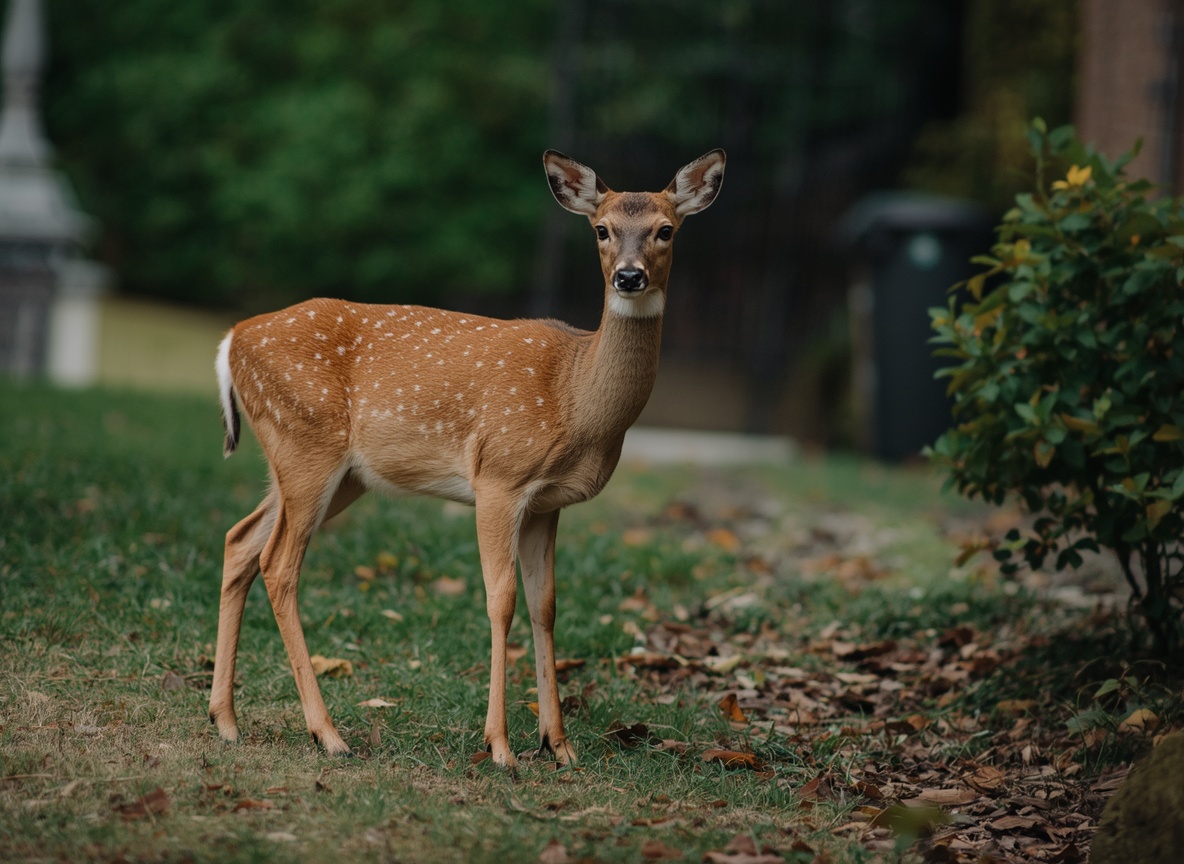
Dead Deer Removal
Michigan's biggest seasonal carcass call. Adult white-tailed deer carcasses can weigh 150-250 lbs — beyond DIY for most homeowners. Heavy-equipment removal + disposal.
View details →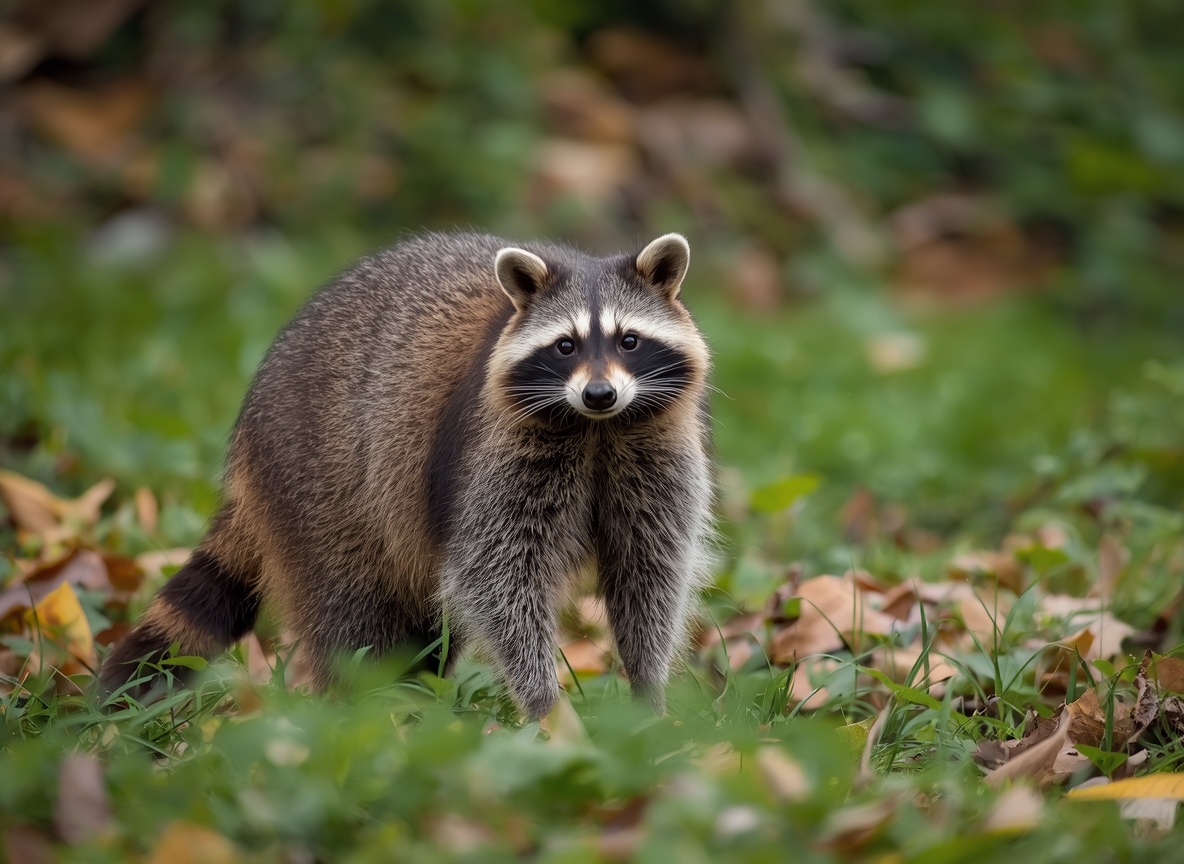
Dead Raccoon Removal
The #1 dead-animal call in Michigan, and the one most likely to be indoors. If the smell is coming from an attic or chimney and you never saw the animal, a raccoon is a likely source in a Michigan home; a smell from inside a finished wall is more often a mouse or a rat.
View details →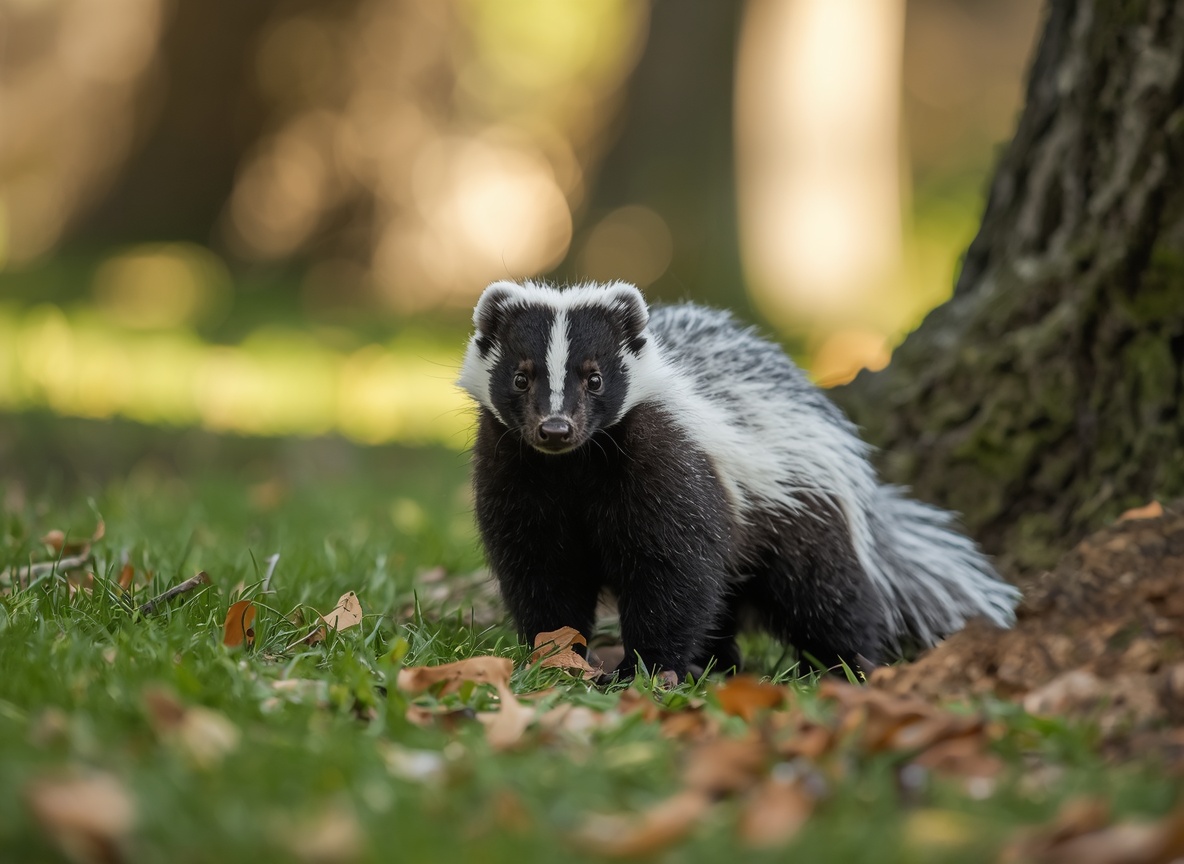
Dead Skunk Removal
Skunk is the odor call. Musk released at death saturates soil, decking, and siding and will outlast the carcass by weeks if only the body is removed. Every skunk recovery includes odor treatment at the site — the step most DIY removals skip.
View details →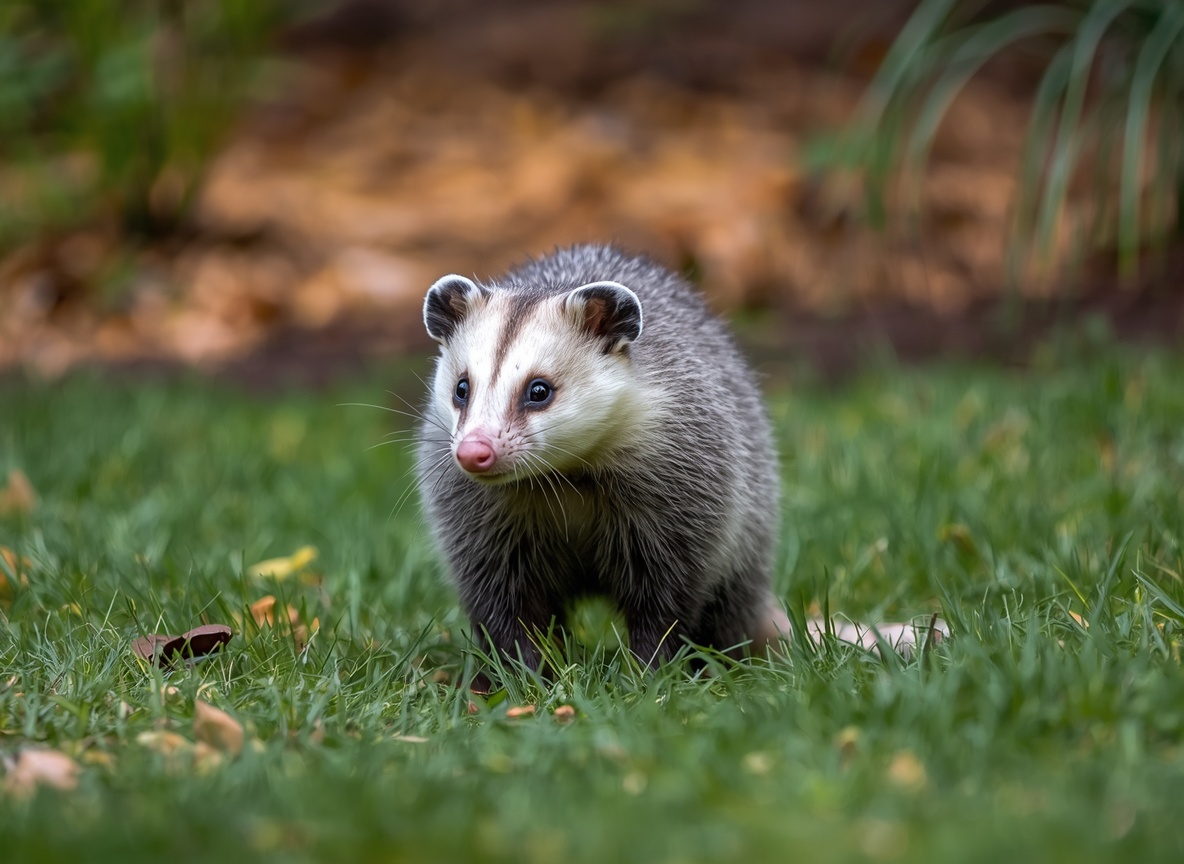
Dead Opossum Removal
The operator reaches a dead opossum by moving a lattice panel, a crawl-space hatch or a window-well cover, whichever is in the way. Michigan opossums also get indoors through uncapped chimneys and pet doors left open at night.
View details →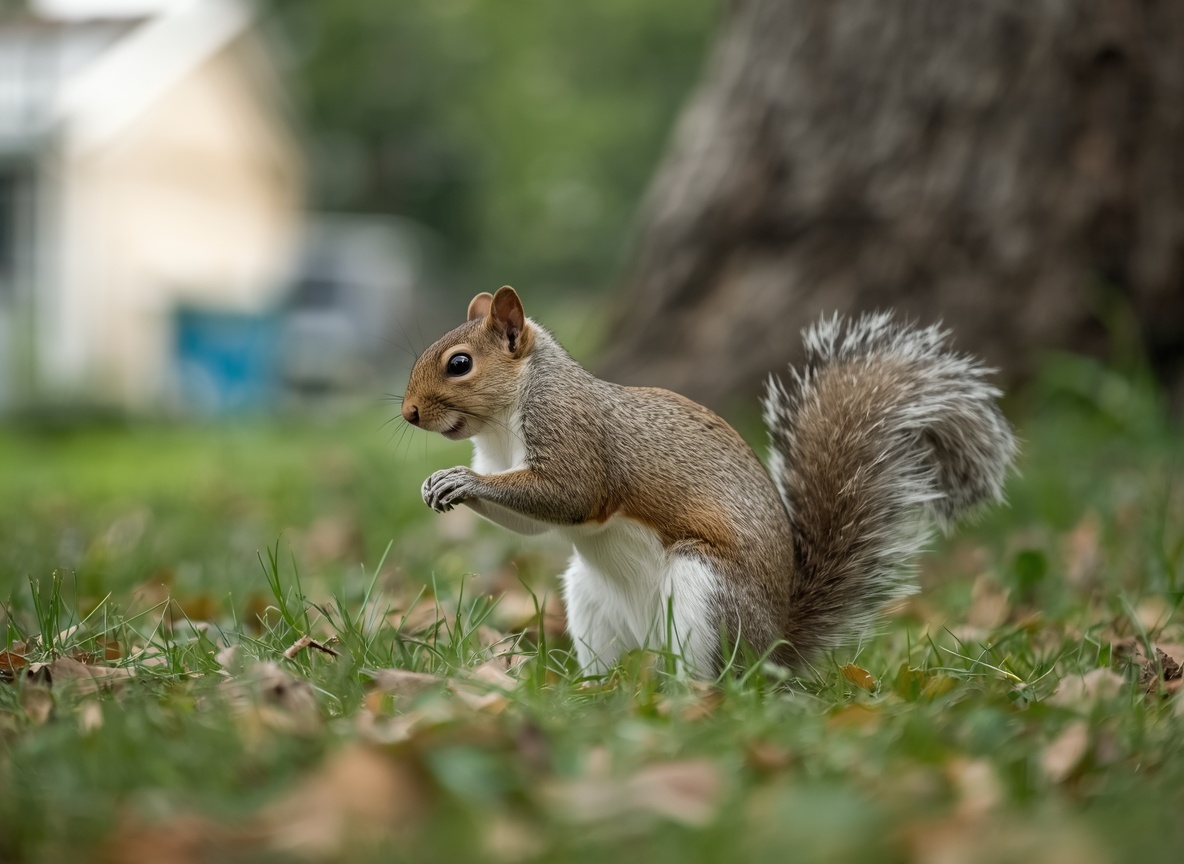
Dead Squirrel Removal
From your attic hatch, the operator heads for the hole the squirrel chewed along the soffit or roofline and searches the insulation back from there. Michigan squirrels mate in late winter and mid-summer, so a female that dies in spring or late summer may leave young nearby.
View details →
Dead Bird Removal
A bird can die down the chimney flue, in a dryer or bath-fan duct, or behind a gable vent, and its smell and flies then come through the damper or grille. The operator reaches it through that same opening.
View details →You Can Smell It But You Can't Find It
Most callers never see what died — they know a room started smelling and roughly where it is coming from. Start here instead, by where the smell is worst.
Dead Animal in a Wall
You can smell it, you cannot see it, and you do not know what it is. Here is the part most sites in this trade will not put in writing: a carcass sealed inside a finished wall is usually a mouse or a rat, and the odour generally lessens as decomposition runs its course. Cutting open a finished wall is drywall work, not carcass recovery, and the operators in our network do not do it. What they can do is establish whether the animal is reachable without cutting, handle it if it is, and tell you honestly what to expect if it is not.
View details →Dead Animal in Attic Removal
Heat rises and so does the smell, so an attic carcass announces itself through the ceiling below. Recovery means searching the full attic — including under and between insulation batts — not just the reachable span near the hatch.
View details →Dead Animal Under House Removal
Animals den under structures and die there, in the lowest and least accessible space on the property. Removing the body is only half of it: the soil underneath holds fluid, and untreated soil keeps the smell going after the carcass is gone.
View details →Dead Animal in Crawl Space Removal
A crawl space is a confined space, and the air in it is the air in your house. Recovery is a PPE-and-ventilation job as much as a removal job, and it has to include the vapor barrier and the ground under it.
View details →Dead Animal Odor Removal
Removing the body does not remove the smell. Decomposition fluid soaks into insulation, subfloor, framing, and soil, and those materials keep releasing odor for weeks. Masking agents and ozone do not fix saturated material; removing saturated insulation or soil and treating framing and subfloor in place does.
View details →Emergency Dead Animal Removal
Most dead-animal calls can wait until tomorrow. Some cannot: a restaurant that cannot open, a listing with a showing booked, a tenant who cannot sleep in the room. This is the path for those.
View details →Dead Animal Removal Cost
Price is the second question every caller asks and the one most operators refuse to answer online. The price variables by scenario, plus an honest account of when your county or city will do it for free and you should not be paying anyone at all.
View details →Commercial Dead Animal Removal
A carcass in a commercial building is a business problem before it is a wildlife problem: a health inspection, a closed dining room, a tenant complaint, or a unit that cannot be shown. Paperwork you can file.
View details →Roadkill Removal
Whether you pay for this depends entirely on where the animal is lying. State route, interstate, and most city streets are covered by a public agency at no cost. Private drives, parking lots, business frontages, and private roads are the owner's responsibility, and that is paid work for an independent operator, where one covers the address.
View details →Six Reasons to Use Our Network
Quote by Phone
The operator quotes before anyone drives out.
Pricing
Quoted on the call once the operator knows the animal, where it is, the access and the disposal. No per-hour billing.
Independent Local Operators
Independent operators do the field work. Where one covers your address, we route your call to them and take no part in the job itself.
Indoor Recovery Specialists
Attic, walls, crawlspace, chimney — reached where there is a way in without cutting a finished surface — from an attic above the bay, a crawl space below it, or an existing opening. Enzymatic sanitize prevents new wildlife following the scent trail.
Heavy-Load Deer Recovery
Adult white-tail can weigh 150-250 lbs — beyond DIY. Recovery needs a winch, a tarp and a disposal-compliant vehicle. Peak season is the Oct–Dec rut and the January post-rut.
Hidden Carcass Search
Smell but nothing visible? That is its own call. Operators trace the source through the attic, crawl space, chimney and any wall void they can reach without cutting, then treat the site where the carcass is recovered.
A dead animal removal network for Michigan homeowners.
When you find a dead raccoon under your deck, a deer in your driveway, or notice that distinct decomposition smell coming from your attic — you need a phone number that answers and a price agreed before anyone drives over. That's what we built.
Michigan Dead Animal Removal is an advertising intermediary. Field work is performed by independent wildlife operators. Licensing, disposal compliance and rabies-vector handling are their responsibility, not ours.
Michigan Wildlife Carcass Pressure by Species and Season
Different species call at different times of year. Knowing the pattern helps homeowners anticipate the busy seasons.
| Species | Peak Season | Typical Location | Rabies Vector |
|---|---|---|---|
| Raccoon | Spring (denning) + Late summer (young dispersing) | Attic, garage, under deck | Yes |
| White-tailed Deer | Oct–Dec rut + January post-rut | Roadside, driveway, property edge | No |
| Squirrel | Fall (storing), late winter | Attic, soffit, walls | No |
| Opossum | Year-round | Under deck, crawlspace | No |
| Skunk | Spring + Early summer (mating, dispersal) | Yard, under porch, road | Yes |
| Bird | Seasonal (migration, weather kills) | Roof, gutter, attic vent, chimney | No |
Common Michigan Dead Animal Questions
Cost, who removes it, whether you can legally trash it, Michigan disposal & pet-burial law, health risks, and the removal process — every question answered in one place.
Read the Full Dead Animal FAQ →26 Cities, One Phone Number
One number for all 26 Michigan cities on this page; calls route by ZIP where an operator covers the address. Each location page covers the local pickup ordinance, road jurisdiction, and the species most frequently called in for that city.
Detroit, MI
Wayne County · metro pop ~4,300,000
Most-called species in Detroit skew urban rather than rural: raccoon (pre-1940 attics and chimneys in Boston-Edison, Indian Village, Palmer Woods), opossum and skunk (porch voids, garage slabs, and al…
Detroit details →Grand Rapids, MI
Kent County · metro pop ~1,090,000
Most-called species in greater Grand Rapids: raccoon (year-round, peak spring den + late summer young), deer (especially Oct-Dec rut on rural-edge subdivisions), squirrel (attic + soffit access from m…
Grand Rapids details →Lansing, MI
Ingham County · metro pop ~540,000
Most-called species in greater Lansing: deer (US-127 + I-69 rural-edge corridors), raccoon (older East Lansing + REO Town housing), squirrel (mature-tree neighborhoods), opossum + skunk (Okemos, Hasle…
Lansing details →Flint, MI
Genesee County · metro pop ~406,000
Most-called species in greater Flint: deer (I-69 + I-75 rural-edge corridors in Grand Blanc + Fenton), raccoon (older Flint housing stock), opossum + skunk (Burton + Davison yards), squirrel (attic + …
Flint details →Ann Arbor, MI
Washtenaw County · metro pop ~370,000
Most-called species in greater Ann Arbor: deer (high urban density along the Huron River nature areas + US-23 corridor), raccoon (Old West Side + Burns Park older homes), squirrel (mature-tree neighbo…
Ann Arbor details →Kalamazoo, MI
Kalamazoo County · metro pop ~265,000
Most-called species in greater Kalamazoo: raccoon (Vine + Westnedge Hill older housing), deer (Oshtemo + Texas Township wooded edge + I-94 corridor), opossum + skunk (Portage + Comstock yards), squirr…
Kalamazoo details →Pontiac, MI
Oakland County · metro pop ~1,288,337
Most-called species across Oakland County: deer (rec-area and lake-country subdivisions onto I-75 and M-59, peak Oct-Dec rut), raccoon (dense suburban attics and chimneys; a primary Michigan rabies ve…
Pontiac details →Warren, MI
Macomb County · metro pop ~886,221
Most-called species across Macomb County: raccoon (post-war tract housing, attics and chimneys; primary Michigan rabies vector with bats), waterfowl, muskrat and beaver (Lake St. Clair frontage, canal…
Warren details →Holland, MI
Ottawa County · metro pop ~308,459
Most-called species across Ottawa County: deer (wooded dune ridges and rural-edge subdivisions onto US-31 and I-96, peak Oct-Dec rut), raccoon (primary Michigan rabies vector with bats), gull and wate…
Holland details →Howell, MI
Livingston County · metro pop ~197,315
Most-called species across Livingston County: deer (rec-area edge and lake-country subdivisions onto I-96 and US-23, peak Oct-Dec rut — among the higher crash densities in the Lower Peninsula), raccoo…
Howell details →Saginaw, MI
Saginaw County · metro pop ~187,688
Most-called species across Saginaw County: waterfowl, muskrat and beaver (the four-river confluence, Shiawassee NWR fringe, and state game areas — a far larger share of calls here than most Michigan c…
Saginaw details →Muskegon, MI
Muskegon County · metro pop ~177,901
Most-called species across Muskegon County: raccoon (lumber- and foundry-era housing; primary Michigan rabies vector with bats), deer (dune ridge and inland forest edge onto US-31 and M-46, peak Oct-D…
Muskegon details →Port Huron, MI
St. Clair County · metro pop ~160,486
Most-called species across St. Clair County: waterfowl and muskrat (St. Clair River marshes, Harsens Island, and the Algonac flats), raccoon (river-town housing; primary Michigan rabies vector with ba…
Port Huron details →Jackson, MI
Jackson County · metro pop ~159,552
Most-called species across Jackson County: deer (Waterloo Recreation Area edge and lake-country subdivisions onto I-94 and US-127, peak Oct-Dec rut), raccoon (older city housing; primary Michigan rabi…
Jackson details →Monroe, MI
Monroe County · metro pop ~156,004
Most-called species across Monroe County: waterfowl and muskrat (the Lake Erie marshes and Pointe Mouillee — among the heaviest concentrations in Michigan), raccoon (primary Michigan rabies vector wit…
Monroe details →St. Joseph, MI
Berrien County · metro pop ~152,444
Most-called species across Berrien County: deer (dune ridge, orchard, and vineyard edges onto I-94 and US-31, peak Oct-Dec rut), raccoon (primary Michigan rabies vector with bats — and a common orchar…
St. Joseph details →Battle Creek, MI
Calhoun County · metro pop ~133,408
Most-called species across Calhoun County: raccoon (Battle Creek and Marshall's older housing; primary Michigan rabies vector with bats), deer (Fort Custer and river-corridor edges onto I-94 and I-69,…
Battle Creek details →Allegan, MI
Allegan County · metro pop ~123,188
Most-called species across Allegan County: deer (Allegan State Game Area edge and farmland onto M-40 and M-89, peak Oct-Dec rut — sustained pressure from the resident herd), raccoon (primary Michigan …
Allegan details →Charlotte, MI
Eaton County · metro pop ~109,581
Most-called species across Eaton County: deer (farmland and river-corridor edges onto I-69 and M-50, peak Oct-Dec rut), raccoon (Charlotte and Grand Ledge's older housing plus Delta Township suburbs; …
Charlotte details →Bay City, MI
Bay County · metro pop ~102,123
Most-called species across Bay County: waterfowl, muskrat and beaver (Saginaw Bay shoreline, Tobico Marsh, and the flyway — a standing share of calls), raccoon (lumber-era Victorians and worker housin…
Bay City details →Adrian, MI
Lenawee County · metro pop ~97,779
Most-called species across Lenawee County: deer (Irish Hills moraine and farmland edges onto US-12 and M-52, peak Oct-Dec rut), raccoon (Adrian's older housing and lake cottages; primary Michigan rabi…
Adrian details →Traverse City, MI
Grand Traverse County · metro pop ~96,729
Most-called species across Grand Traverse County: deer (orchard, vineyard, and state-forest edges onto US-31 and M-72, peak Oct-Dec rut), raccoon (a heavy orchard and short-term-rental nuisance; prima…
Traverse City details →Lapeer, MI
Lapeer County · metro pop ~89,516
Most-called species across Lapeer County: deer (state game area and farmland edges onto I-69 and M-24, peak Oct-Dec rut), raccoon (primary Michigan rabies vector with bats — and a common barn and hay-…
Lapeer details →Midland, MI
Midland County · metro pop ~83,754
Most-called species across Midland County: raccoon (river-corridor habitat reaching into suburban blocks; primary Michigan rabies vector with bats), deer (Chippewa Nature Center and floodplain forest …
Midland details →St. Johns, MI
Clinton County · metro pop ~80,432
Most-called species across Clinton County: deer (farmland and game-area edges onto US-127 and M-21, peak Oct-Dec rut), waterfowl and muskrat (Maple River State Game Area wetlands), raccoon (primary Mi…
St. Johns details →Paw Paw, MI
Van Buren County · metro pop ~76,071
Most-called species across Van Buren County: deer (vineyard, blueberry, and dune-ridge edges onto I-94 and M-40, peak Oct-Dec rut), raccoon (a heavy vineyard and orchard nuisance; primary Michigan rab…
Paw Paw details →Carcass in Your Yard, Attic, or Driveway?
Call (616) 612-2122 for pickup where an operator covers your address. Quote by phone first. The price is set once the operator knows the job.
Plain-English Answers for Michigan Homeowners
Deep-dive guides on the most-asked dead-animal questions in Michigan — who picks them up, how to find a hidden carcass by smell, how to dispose of one legally, and what to do if it's in your yard right now.
Who Picks Up Dead Animals in Michigan?
City vs MDOT vs private. Free service vs paid. When to call which. The complete Michigan answer.
Read the guide → 🔎 Hidden CarcassDead Animal Smell in the House — Find It & Remove It
How to track an unseen carcass by odor. Common hiding spots. What NOT to do (covering with deodorizer makes it worse).
Find the carcass → 📋 Legal DisposalHow to Dispose of a Dead Animal in Michigan
MDARD + county solid-waste rules. Double-bag method. What your trash hauler accepts. Rabies-vector species special handling.
Disposal guide → 🛠 Step-by-StepWhat to Do With a Dead Animal in Your Yard
Step-by-step for right now. What to wear, what tools. When to call the city, when to call a private removal service.
Step-by-step →